How A ZIP Library Bug Took Down Production Nodes
It started with a pattern in the monitoring dashboards that was easy to miss. Every few days, one or two nodes in the BI backend system would unexpectedly shut down. No dramatic spike in CPU usage, no memory exhaustion, and no network issues. The application logs showed nothing unusual before the crashes. One moment, the node was happily serving requests; the next, it was gone.
The randomness made it maddening. Setting up a debugger and waiting wasn’t viable - it might be days before anything happened. There was no correlation with deployments, traffic patterns, or time of day. It was like trying to catch smoke with bare hands.
The breakthrough came from an often-overlooked source: JVM core dump files. When the JVM crashes hard enough, it leaves behind error logs, much like a black box recorder. Opening these files revealed something unexpected - the crash wasn’t happening in application code at all. It was deep in the JVM itself, specifically in a native library called libzip.so.
The error was a SIGBUS signal, which essentially means the process tried to access memory it shouldn’t have. The stack trace told an interesting story: starting from application code, going through the custom class loader, and eventually dying somewhere in the JVM’s native method calls. This wasn’t a typical NullPointerException.
When dealing with JVM internals, the OpenJDK bug tracker becomes an essential resource. After searching through various reports, one stood out: JDK-8142508. The symptoms described there matched perfectly with what was happening in production.
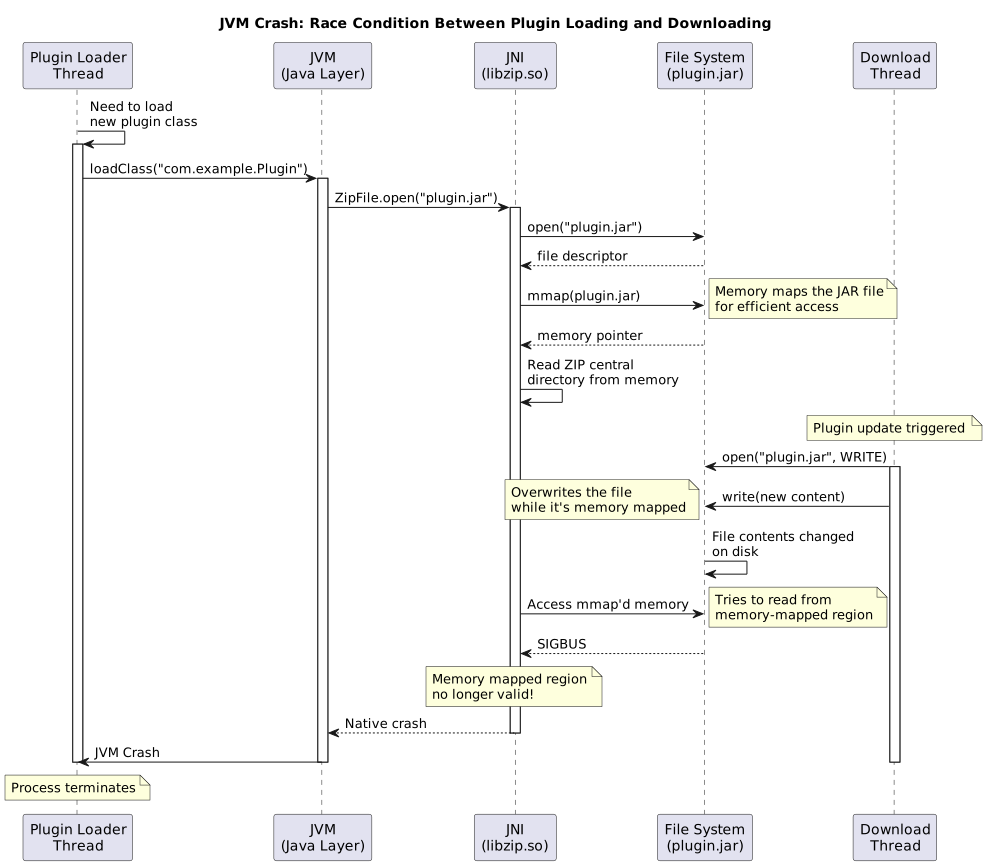
Here’s where things got interesting. ZIP file operations in Java aren’t actually implemented in Java - they’re done in native C code. When the JVM needs to read a JAR file (which is just a ZIP file with a fancy name), it calls out to this native code through JNI. The libzip.so library uses a clever optimization called memory mapping (mmap) to map the ZIP file’s central directory directly into memory.
But there’s a catch. What happens when someone overwrites a ZIP file while it’s still memory-mapped? The mapped memory becomes invalid, and the next time the JVM tries to read from it - boom, SIGBUS, game over.
The production system had a particular feature that suddenly became very relevant: hot-swapping plugins. To handle various customization requirements, the system would periodically download updated JAR files from the network and load them dynamically. This allowed adapting to new requirements without restarting the entire service.
But here was the smoking gun: there was no synchronization between downloading and loading these JARs. The download process would happily overwrite a JAR file while the class loader was in the middle of reading it. Most of the time, this worked fine - the operations would happen at different times. But occasionally, when the stars aligned just wrong, both operations would hit the same file simultaneously. The class loader would be reading through libzip.so with its memory-mapped view, while the download process was rewriting the file underneath it. Result: instant JVM death.
The “proper” solution would be upgrading to Java 9 or later, where this bug has been patched. But anyone who’s worked in production knows that upgrading major Java versions isn’t something you do lightly, especially not for an intermittent issue. The entire ecosystem - libraries, frameworks, deployment pipelines - was built around Java 8.
Thankfully, the JVM developers had included an escape hatch: -Dsun.zip.disableMemoryMapping=true. This parameter tells the JVM to use good old-fashioned file I/O instead of memory mapping when reading ZIP files. It might be slightly slower, but it completely sidesteps the race condition.
Before touching production, a proper test was needed. In the development environment, both the JAR download frequency and the class loading rate were cranked up to eleven. The result was dramatic - instead of crashing every few days, the JVM would die multiple times per hour.
Then came the moment of truth. After adding the magic parameter, the torture test ran for hours without a single crash. Even under conditions far more extreme than production would ever see, the JVM stayed rock solid.
The parameter was rolled out to production with cautious optimism. The monitoring dashboards told the story: the random crashes simply stopped. Days turned into weeks with zero unexpected node terminations. The ghost in the machine had finally been exorcised.
This debugging journey reinforced something that experienced engineers know but rarely talk about: sometimes the best solution isn’t the perfect one. Yes, upgrading to Java 9 would have been “correct,” but disabling memory mapping was practical, safe, and immediately effective.
The bug also highlighted how modern systems are built on layers upon layers of abstraction, and sometimes problems lurk in the spaces between those layers. A race condition between Java’s class loading and file I/O, manifesting through native C code, triggered by a business requirement for dynamic plugins - it’s the kind of complex interaction that makes production debugging both frustrating and fascinating.
Most importantly, it served as a reminder that the hardest bugs to solve aren’t always the most complex ones. Sometimes they’re simply the ones that refuse to show themselves when being investigated. But with patience, systematic investigation, and a willingness to dig deep into the stack, even the most elusive bugs eventually reveal their secrets.